
Every parent knows the sound. Not crying, not laughing — silence. Thirty seconds of it, from the next room, and your stomach drops before your feet even move. You walk in and there he is: your toddler, sitting very still, marker in fist, wearing an expression of deep artistic satisfaction. The artwork is on his shirt. Some of it is on the wall. A bit, somehow, is on his forehead.
Take a breath. Permanent marker is badly named. On most household surfaces it is not permanent at all — it is just waiting for the right solvent, a bit of patience, and someone who knows not to scrub. Here is the order to do things in, surface by surface.
Short answer
Permanent marker ink is a dye held in resin, and it dissolves in alcohol. That is the entire trick. Rubbing alcohol, alcohol-based hand sanitiser or an alcohol hairspray will break the ink down so you can blot it away instead of spreading it. On clothes: blot with alcohol through paper towels, then wash cold. On painted walls: start gentle with a damp magic eraser or white toothpaste, and only bring out the alcohol if those fail. Test everything on a hidden patch first, and never put a stained garment in the tumble dryer — heat sets what is left for good.
Why alcohol works (and water doesn't)
The dye in a permanent marker is not water-soluble, which is why a wet cloth just smears it into a grey ghost. But the resin that carries the dye gives up the moment it meets alcohol. The solvent loosens the ink's grip on the fibres or the paint, the dye floats free, and a clean cloth or paper towel can pick it up. Everything below is really just variations on that one idea: dissolve, blot, repeat, and keep giving the ink somewhere clean to go.
Clothes: blot it out, don't rub it in
The method that works on most fabrics
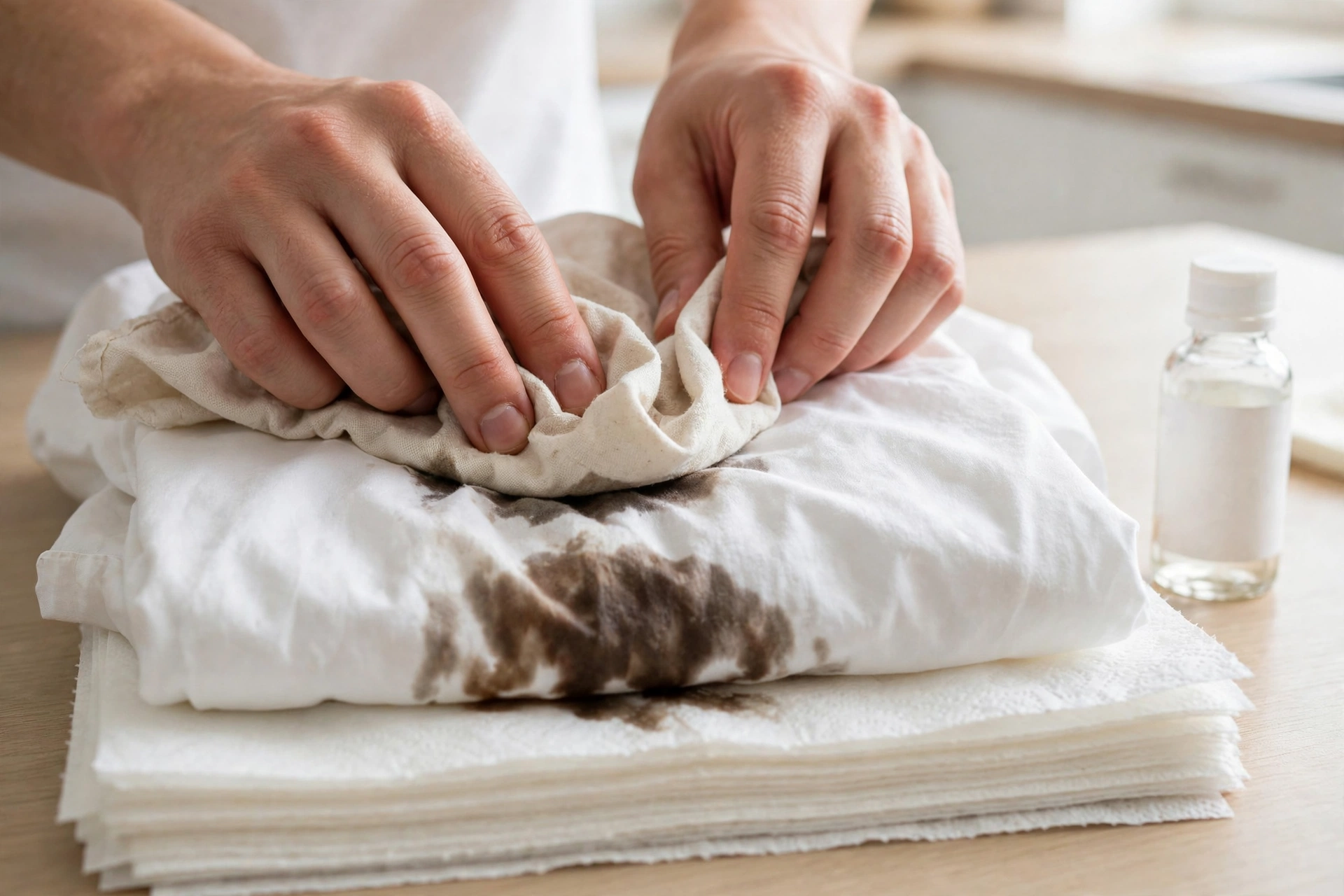
Speed helps, but a dried stain is still worth attempting. Lay the stained part face-down on a thick stack of paper towels or an old white cloth. This is the step people skip, and it matters: as the alcohol loosens the ink, it needs somewhere to go, and you want it going down into the towels — not sideways across clean fabric.
Dab rubbing alcohol or hand sanitiser around the edge of the stain first, then work onto the stain itself. Blotting from the outside in keeps the mark from spreading into a bigger, fainter one. Then blot, lift, check the towel. You should see ink transferring. Move to a clean patch of towel, add more alcohol, blot again. Keep going until the towel comes away clean, then wash the garment cold. Check it before drying: if a shadow remains, repeat the blotting rather than letting the dryer bake it in.
The two rules that matter most
Blot, never rub. Rubbing feels productive and does the opposite — it spreads the dye and pushes it deeper into the weave. And test first on a hidden seam or inside hem, because alcohol can lift fabric dye as happily as marker dye. For washable fabrics, Tide's stain-removal guide walks through the same blot-don't-scrub routine.
Gentler options and the "send it out" cases
For school uniforms and anything you'd rather not hit with solvent straight away, some parents swear by an overnight soak in milk, which loosens the stain enough for a normal wash to finish the job. A pre-treatment of white vinegar with a drop of dish soap also helps on some fabrics. Silk, wool and anything labelled dry clean only are a different story: take them to a cleaner, tell them exactly what the stain is, and let them earn their money.
Walls: gentle first, because paint is delicate
A wall is not a shirt. You cannot throw it in the wash, and aggressive cleaning shows. Work up the ladder, mildest first.
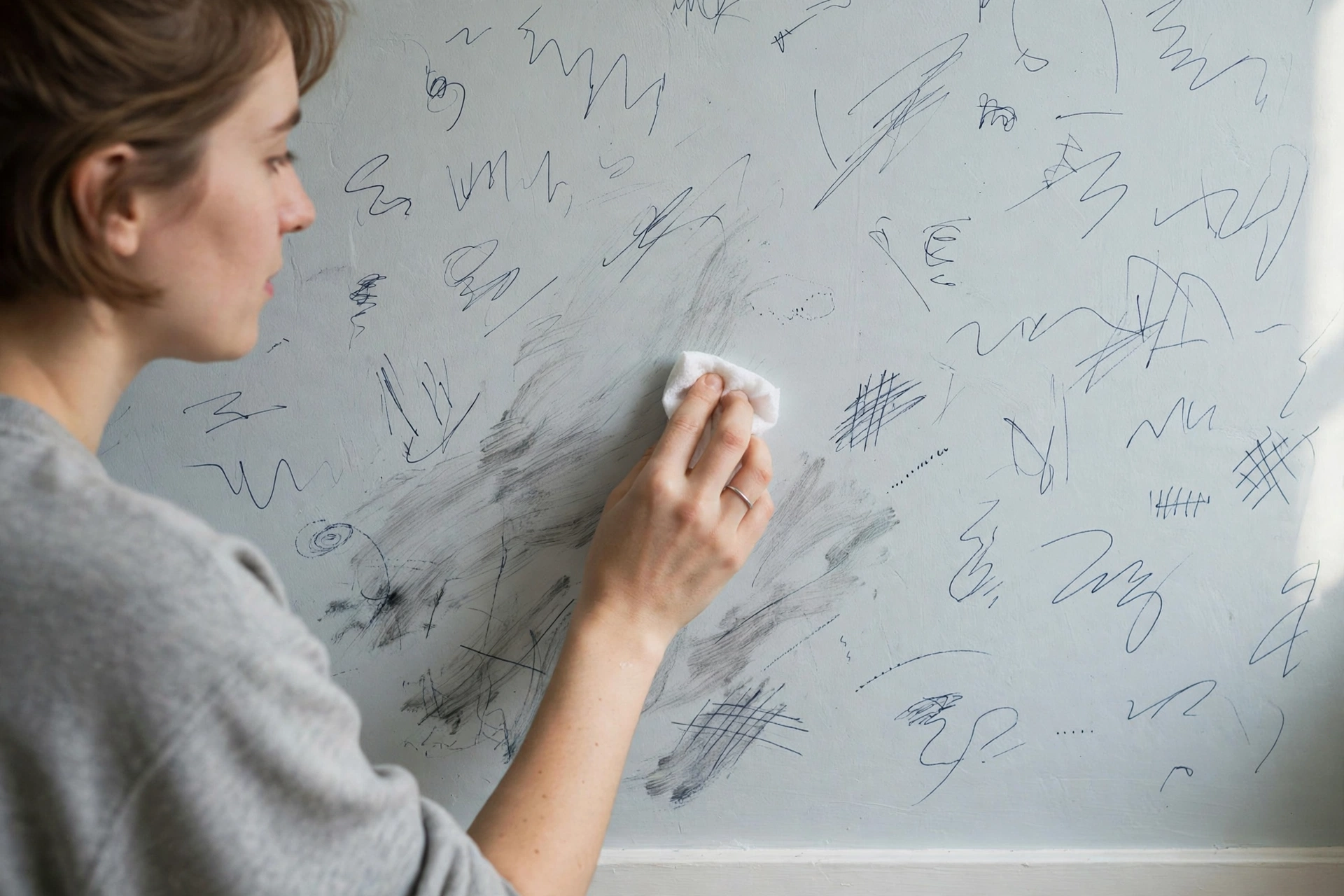
Start with a melamine sponge — the "magic eraser" type — dampened and used with light pressure. It lifts marker off paint remarkably well, but understand what it is: a very fine abrasive. It can dull glossy paint and polish a visible shiny patch into a matte wall, so go gently and test behind a piece of furniture first.
Next rung: plain white toothpaste — not gel — rubbed over the mark with a soft cloth, or a paste of baking soda and a little water. Both are mild abrasives with a bit of cleaning power, and on washable paints they shift most toddler art on their own.
If the mark is still smirking at you, rubbing alcohol on a cotton ball usually finishes it. Dab rather than soak, and test first, because alcohol can soften and lift some paints along with the ink.
Flat or matte paint is the honest exception. It has no protective sheen, so the ink sinks straight in, and heavy scrubbing just wears a pale crater into the finish. If half an hour of gentle work isn't winning, repainting the one patch is often cheaper in sanity than scrubbing on. Keep that in mind if the wall belongs to a rented flat and your inspection is next week — a tester pot of matched paint can be the fastest fix of all
The dry-erase trick — brilliant, but only in the right place
You may have heard this one: scribble over permanent marker with a dry-erase marker, then wipe. It genuinely works — on smooth, non-porous surfaces. Whiteboards, glass, glossy tile and laminated desk tops come clean because the solvent in the dry-erase ink dissolves the permanent ink, and the whole lot wipes off the sealed surface.
Do not try it on painted walls or fabric. There, the dry-erase ink simply soaks in next to the permanent ink, and you now have two stains and a story. On the right surface, though, it feels like a magic trick, and it is a good one to keep for the whiteboard at work.
Other surfaces, quickly
Skin. Soap, warm water and a bit of patience shift most of it; a dab of hand sanitiser or a little cooking oil on a cloth helps the stubborn bits. It fades on its own within a day or two regardless.
Wood furniture. White toothpaste or a small amount of alcohol on a cloth, used gently. Finishes vary enormously, so test underneath first — alcohol can cloud some varnishes.
Leather. Use a specialist leather cleaner. Alcohol can dry leather out and crack it, which trades a small mark for permanent damage.
- Cotton clothes — Rubbing alcohol, blotted face-down through paper towels, then a cold wash — Avoid: rubbing the stain, and tumble-drying before it is fully out
- Delicate clothes (silk, wool) — A professional cleaner, or a gentle milk soak for washables — Avoid: alcohol and scrubbing
- Glossy painted wall — Damp magic eraser sponge, light pressure — Avoid: hard scouring, which takes the sheen off
- Matte painted wall — White toothpaste or baking soda paste, gently — Avoid: long scrubbing sessions; repainting the patch may win
- Whiteboard and glass — Scribble over with a dry-erase marker, then wipe — Avoid: abrasive pads
- Wood furniture — White toothpaste, or a little alcohol with care — Avoid: soaking the finish with alcohol
A quick word on safety
Alcohol-based cleaners need ventilation, so crack a window before you settle in for a long blotting session. Keep bottles well away from small children — the same toddler who caused the stain will happily investigate the cure — and away from naked flames. And patch-test everything, every time, on every new surface. Thirty seconds of testing beats a ruined cushion cover.
Frequently asked questions
The stain has already been through the wash. Is it too late?
Not necessarily. Washing alone rarely fixes a marker stain in place, so alcohol blotting is still worth a proper go. The real point of no return is the tumble dryer: heat is what truly sets it. If it has only been washed and air-dried, treat it as a fresh stain and be patient.
Will hand sanitiser really work, or do I need proper rubbing alcohol?
It works, provided it is alcohol-based — check the label for a decent alcohol percentage. The gel texture is actually handy on walls and vertical surfaces, because it sits on the stain instead of running down it. Rubbing alcohol is cheaper for big jobs on clothing.
How do I get marker off my child's skin without harsh chemicals?
Start with soap and warm water; most of it goes. For the rest, a little olive or coconut oil on a soft cloth lifts it gently, and ordinary moisturiser helps it fade. Whatever survives the bath will wear off naturally in a day or two. It looks worse than it is.
The magic eraser left a shiny patch on my wall. Can I fix that?
Sadly, that patch is where the sponge has polished the paint's finish, and it won't wash back. Feathering the area very lightly can sometimes blend it, but usually the fix is paint: one coat over the patch, blended out at the edges. It is exactly why the test-spot rule exists.
Nothing worked on the wall. Now what?
Paint over it — but seal first. Marker dye can bleed through ordinary emulsion, so use a stain-blocking primer over the mark, let it dry, then paint to match. On a small patch in a rented flat, that half-hour job is often the end of the whole saga.
The bit worth remembering
Dissolve, blot, repeat — and let the paper towel do the dirty work. Nine times out of ten the stain that looked permanent at 9 a.m. is a story by lunchtime, usually told while pointing at the one small ghost of it only you can still see. And the marker itself? It lives on a high shelf now. They always do, afterwards.