Everybody knows this moment. You bring home a proper loaf — crusty sourdough, a baguette, a good sliced wholemeal — and the first slices are wonderful. Then life gets in the way for two days, and by Monday morning the bread has turned. The crust is leathery, the inside is dry and crumbly, and the toast you make from it tastes like cardboard with butter on it. You end up throwing half the loaf away and wondering why you keep buying bread you can't finish in time.
Ask around and you'll hear the same story with different bread. A family that buys a big loaf on Saturday and bins a third of it by Tuesday. Someone who keeps their bread in the fridge because it feels like the safe, sensible place — and finds it goes stale even faster there. A person who buys a baguette in the morning and finds it inedible by dinner. The waste adds up, and so does the quiet annoyance of paying for good bread and eating half of it.
The good news is that bread going stale is not a mystery, and it is not something you just have to accept. Once you know what staling actually is — and it is not what most people think — the fix is mostly about picking the right storage for the bread you bought and the time you need it to last.
Short answer
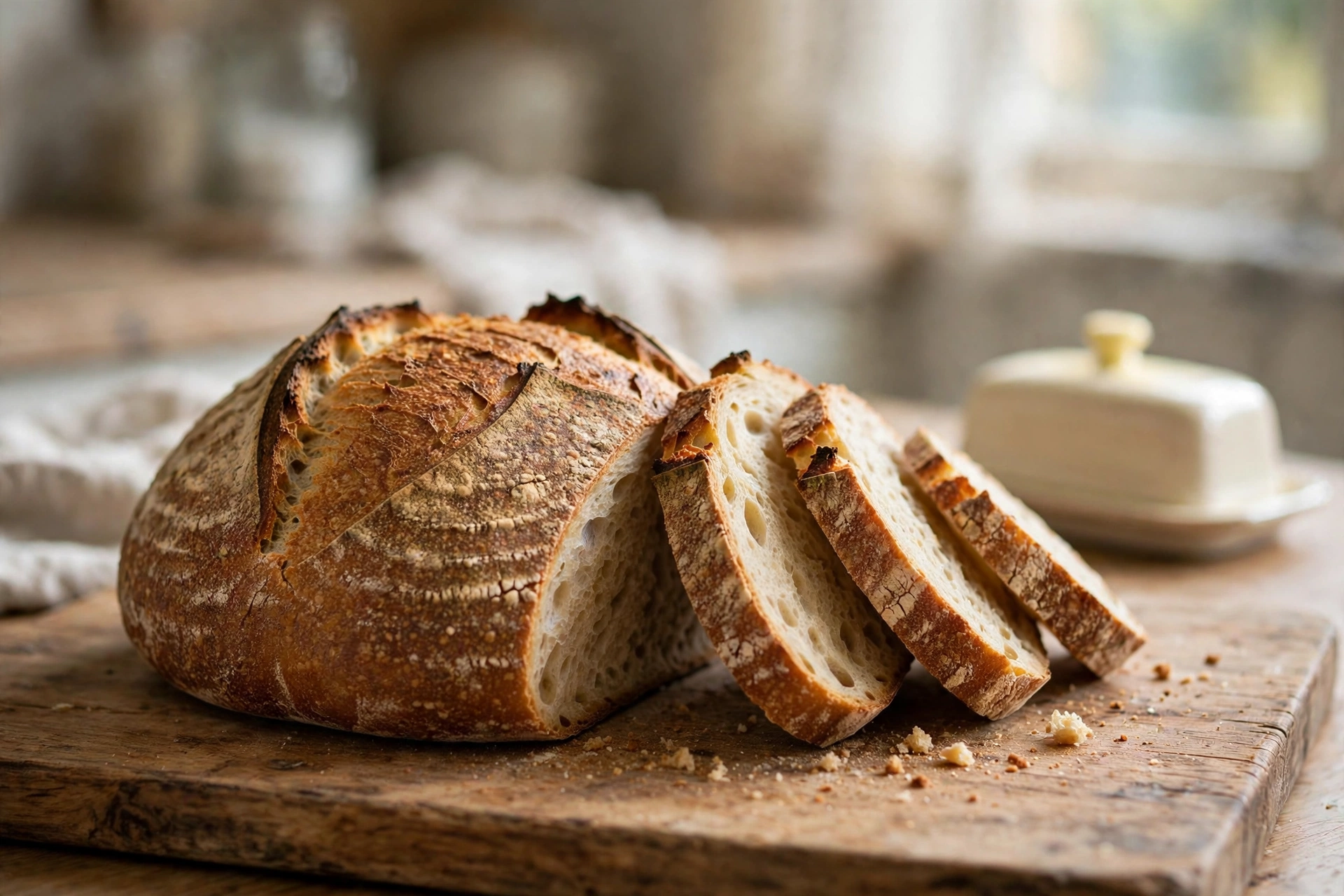
Bread goes stale mainly because of starch retrogradation: the starch molecules inside the crumb slowly rearrange themselves back into a firm, crystalline structure after baking, squeezing water out of the crumb as they do it. That process starts the moment bread leaves the oven and runs fastest at fridge temperature — which is why bread kept in the fridge goes stale quicker than bread kept on the counter. Moisture loss plays a part, but it is the starch changing shape that makes bread feel hard and dry even when it hasn't actually lost much water.
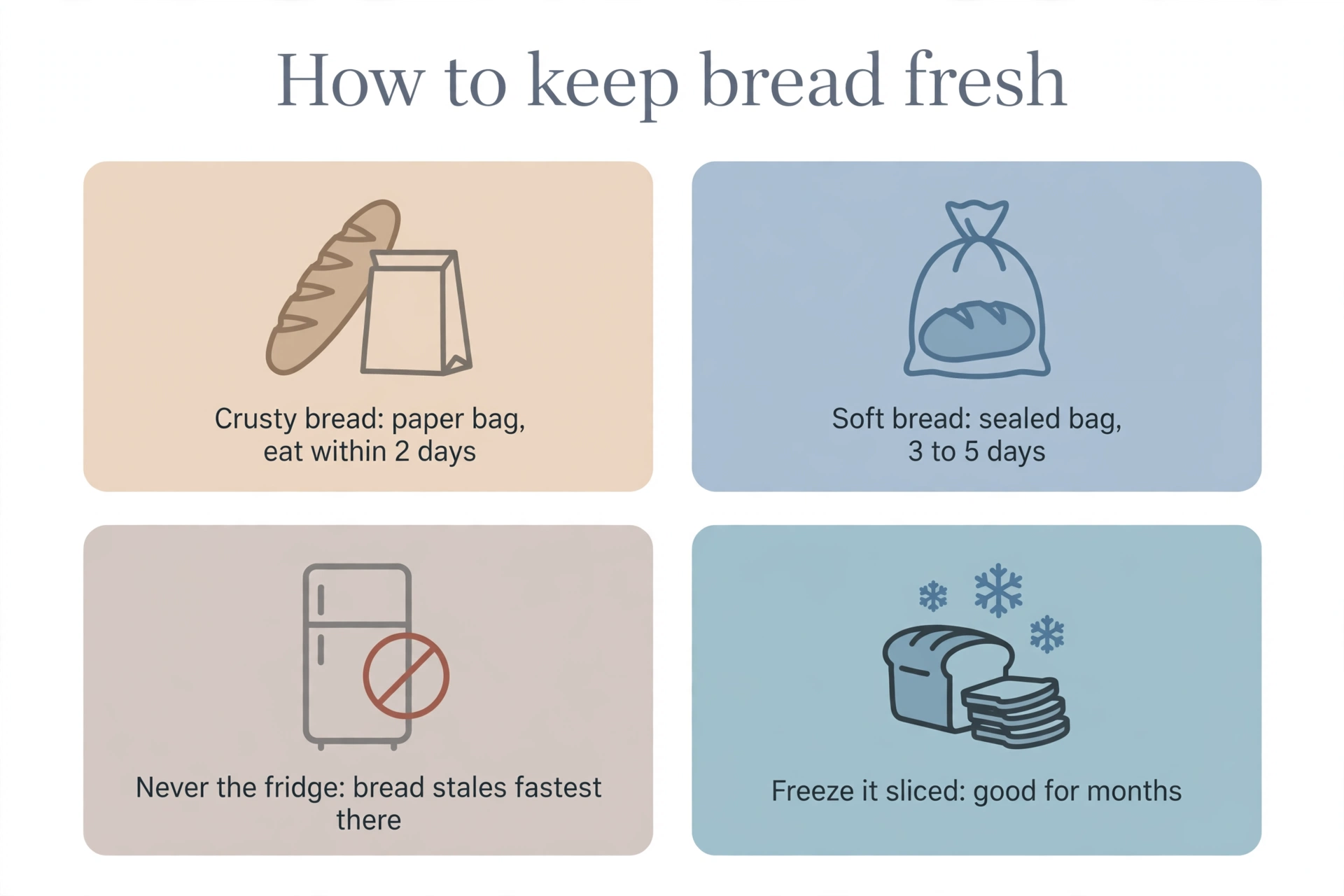
So the rules are simple. Eat crusty lean bread (sourdough, baguette, ciabatta) within two days, stored cut-side down or in a paper bag at room temperature. Keep soft sliced bread in its bag on the counter for three to five days. Never store bread in the fridge unless you have to fight mould in a hot, humid kitchen — and if you do, toast it afterwards. And for anything you won't finish in two or three days, slice it and freeze it: frozen bread keeps for months, and a slice goes straight from the freezer into the toaster.
Staling is not drying out
This is the part that surprises people, and it changes everything about how you store bread. When bread goes stale, your first instinct is that it has dried out — that the water has escaped into the air. Some of it has. But the main culprit is inside the loaf, not outside it.
Fresh from the oven, the starch in bread is soft and swollen with water, in a loose, open structure. As the bread cools and sits, those starch molecules gradually lock back together into tight, rigid crystals — a process food scientists call retrogradation. As they crystallise, they push water out of the crumb and into the crust, which is why a stale loaf has a dry, hard inside and a crust that has gone soft and chewy at the same time. The bread hasn't necessarily lost much water overall; the water has just moved to the wrong place, and the starch has gone rigid. Reheating a stale slice works precisely because heat temporarily breaks those crystals apart again — which is why a few minutes in a hot oven can bring a day-old loaf back to life, at least for a while.
Two things about retrogradation matter for your kitchen. First, it happens fastest at temperatures just above freezing — roughly fridge temperature, around 4°C. That is the single most useful fact in this whole article: the fridge is the worst place in your house for bread, not the best. Second, it happens slowest at very cold temperatures, below freezing, which is why the freezer is the hero of bread storage and the fridge is the villain. The same loaf that turns to cardboard in three days in the fridge will still make good toast after three months in the freezer.
The kind of bread matters too. Lean breads — sourdough, baguette, ciabatta, anything made mostly of flour, water, salt and yeast — go stale fastest, usually within 48 hours, because there is nothing in them to slow the starch down. Enriched breads — sandwich loaves, brioche, milk bread, anything with fat, sugar or eggs — stay soft for days longer, because the fat and sugar get in the way of the starch crystals forming. That is why a supermarket sliced loaf can still make a decent sandwich on day four while a baguette bought the same morning is already past it by dinner.
- Baguette, ciabatta — 1 day at best on the counter. Eat same day; freeze the rest sliced.
- Sourdough boule — 2–3 days on the counter. Cut-side down on a board, or in a paper bag.
- Soft sliced sandwich loaf — 3–5 days on the counter. In its bag, sealed, at room temperature.
- Enriched bread (brioche, milk bread) — 4–5 days on the counter. In its bag, sealed, at room temperature.
- Flatbread, wraps — 3–4 days on the counter. Sealed bag, room temperature.
- Any bread, longer term — up to 3 months. Sliced, wrapped, in the freezer.
That table is the whole decision in miniature: match the storage to the bread and to how fast you'll eat it, and the waste mostly disappears.
The fridge mistake almost everyone makes
If there is one habit to change after reading this article, it is this one: take the bread out of the fridge. It feels like the responsible thing to do — cold keeps food fresh, doesn't it? For almost everything else in your kitchen, yes. For bread, no, and the reason is the retrogradation curve from the section above. The fridge sits at almost exactly the temperature where starch crystallises fastest. Bread stored in the fridge goes stale roughly three times faster than bread stored on the counter. People who refrigerate their bread to "keep it fresh" are doing the opposite of what they intend, and then blaming the bakery.
There is one exception, and it is worth naming honestly. In a hot, humid kitchen, bread left on the counter can grow mould in two days — and mould is a food-safety problem, not a texture problem. If your kitchen is regularly above 25°C and humid, and your bread keeps going mouldy before it goes stale, the fridge is the lesser evil: it slows the mould even while it speeds the staling. In that case, keep the bread in the fridge and revive each slice by toasting it, which undoes the staling for a few minutes — long enough to eat it. But for most kitchens, most of the year, the counter wins.
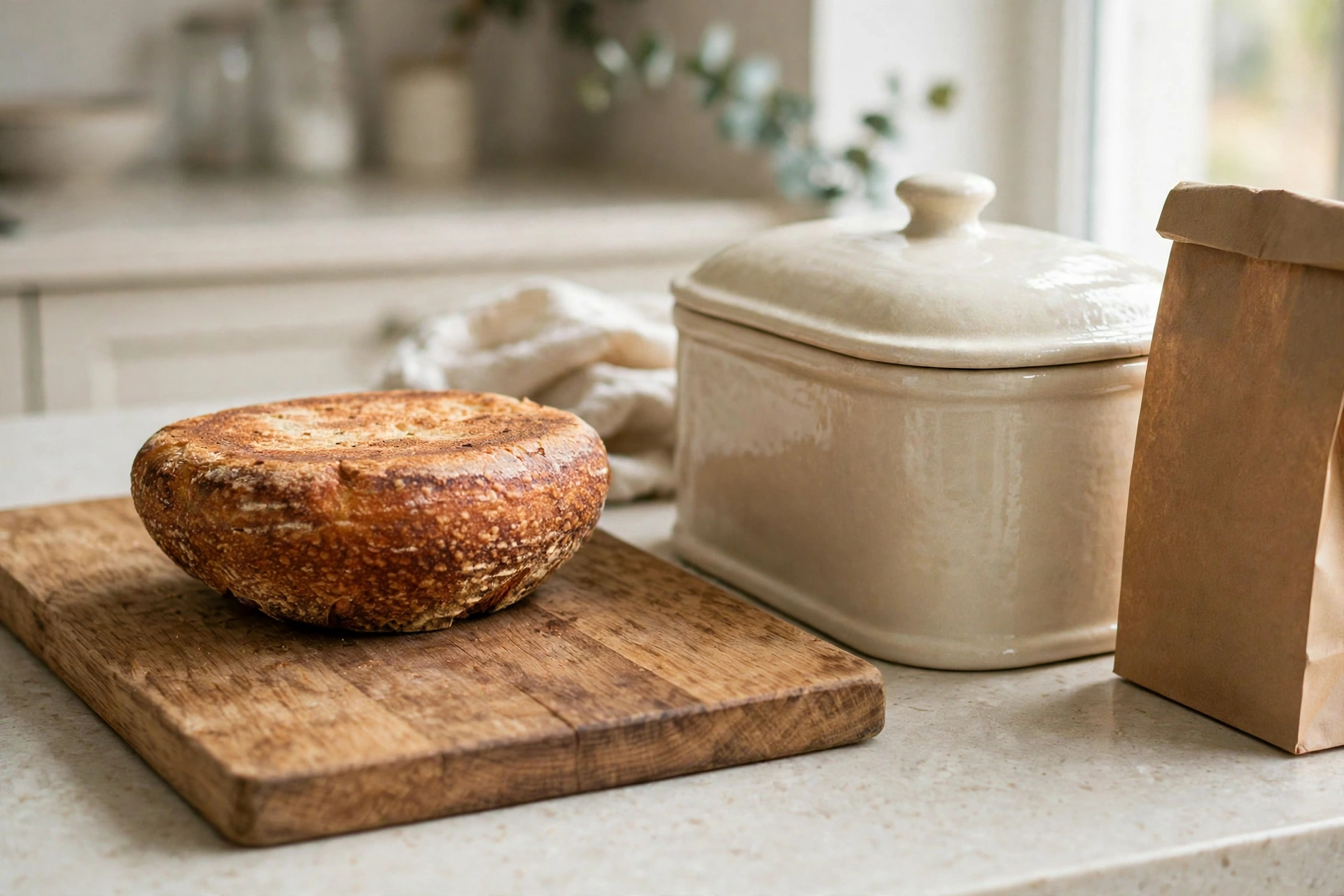
What about the bread box? The old-fashioned wooden or ceramic bread box actually works well, and the reason is airflow: it lets just enough air circulate to keep the crust from going soggy while keeping the crumb from drying out. Food52's storage guide reaches the same conclusion — a ceramic bread box gives the ideal balance, and if you don't have one, the low-tech version works nearly as well: sit the loaf cut-side down on a wooden board, or keep it in a paper bag, which protects the loaf while still letting air move around it. How to keep bread fresh, from Food52 tested the options side by side and found the plastic bag the best defence against drying out — squeeze the air out before sealing, accept that the crust will soften, and bring the crunch back with the toaster.
The summary rule: crusty bread wants air (paper bag, bread box, cut-side down), soft bread wants a sealed bag, and no bread wants the fridge unless mould forces your hand.
Freezing: the method that actually stops the clock
Freezing is the one storage method that genuinely stops staling instead of slowing it, because below freezing the starch crystals barely form at all. It is also the method people use wrong most often, usually in one of two ways: they freeze the whole unsliced loaf, then have to thaw the entire thing to get two slices; or they toss a half-open bag into the freezer, where it picks up freezer burn and comes out tasting of the frozen peas it sat next to.
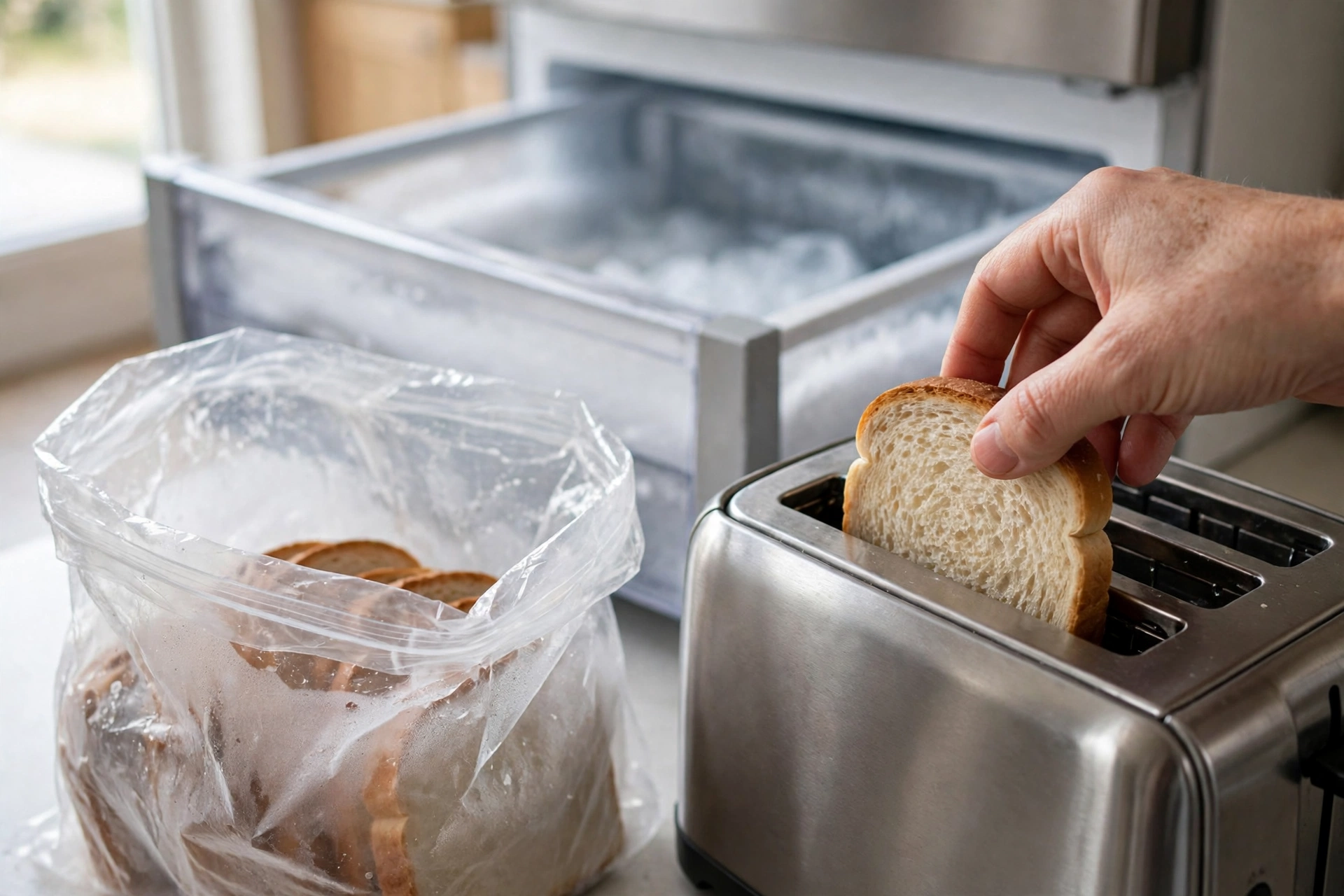
Do it this way instead. The day you buy the bread — or at the latest, the day after — slice the part you won't eat in the next two days. Put the slices in a freezer bag, squeeze out as much air as you can, seal it, and label it with the date. Slices freeze individually, so you can take out exactly what you need: two slices for toast, four for sandwiches. A slice goes straight from the freezer into the toaster, no thawing needed, and comes out as good as fresh — sometimes better, because toasting revives the crumb. A whole unsliced loaf can be thawed on the counter for an hour or two, then finished for five minutes in a hot oven to bring the crust back.
How long does it keep? Well wrapped, two to three months without any noticeable loss of quality; after that it is still safe to eat, but the flavour starts to fade. The key detail is the wrapping: bread left loose in the freezer dries out through sublimation — the ice crystals on the surface are literally the bread's moisture leaving. A tight wrap, with the air pressed out, is what makes the difference between bread that tastes fresh in February and bread that tastes like freezer.
And a practical note for the kitchen this connects to: if your freezer is in the fridge and the fridge itself is making strange noises, the appliance is worth a look before you blame the bread — a fridge that can't hold a steady temperature is a storage problem for everything in it, not just the loaf. Why does my fridge make a buzzing noise at night covers the common causes and which ones need a repair.
Reviving bread that has already gone stale
Stale bread is not ruined bread — not yet, anyway. The starch crystals that make it hard can be partly undone with heat and a little moisture, and a loaf that feels like a brick on Tuesday can still make a good dinner.
The quickest fix: run the loaf or the slice briefly under the tap — yes, actually wet it — then put it in a hot oven (around 180°C) for five to ten minutes. The water turns to steam inside the crust, the heat breaks up the starch crystals, and the bread comes out warm, soft inside and crisp outside. It will go stale again faster than fresh bread would, so eat it straight away; this is a one-time rescue, not a reset.
For sliced bread, the toaster does the same job in miniature: toast is, after all, the reason stale bread is still useful. A slice that is too hard for a sandwich makes perfectly good toast, and toast with butter hides a multitude of staling sins.
And when bread is past reviving, it still has a second life. Stale bread is the starting point for half the world's best comfort food: croutons, breadcrumbs, panzanella, French toast, bread pudding, pappa al pomodoro. The rule for the kitchen is simple: bread that is too stale to eat as bread is rarely too stale to cook with. Throw it away only when it has mould on it — and on mould, the rule is the whole loaf goes, not just the mouldy slice. Mould on bread sends invisible threads through the whole loaf, and cutting off the green bit doesn't make the rest safe.
Buying smarter so there is less to store
Storage is only half the problem. The other half is buying bread at a scale that matches how fast your household actually eats it — and most of us buy for the household we wish we were, not the one we are.
A single person who eats two slices a day does not need a 900-gram sourdough boule; half a loaf, or a small loaf, or a sliced loaf they can freeze in portions, is the honest buy. A family of four that goes through a loaf a day doesn't need to freeze anything at all — the counter is fine, because the bread never lasts long enough to stale. The waste happens in the middle: two people buying the big artisan loaf because it looked wonderful, then eating a third of it.
Two buying habits help. First, ask the bakery to slice the loaf — most will, free — because a sliced loaf is a freezable loaf, and an unsliced one is a commitment to finishing it in two days. Second, when a loaf is on offer, buy two and freeze one the same day; bread bought cheap and frozen immediately is a better deal than bread bought at full price and binned half-eaten. The freezer doesn't care what you paid for the bread, only how well you wrapped it.
Frequently asked questions
Does bread really go stale faster in the fridge?
Yes — measurably faster, about three times faster than on the counter. Starch retrogradation, the process that makes bread hard, runs fastest at fridge temperature (around 4°C). The fridge slows mould, but it speeds staling, so it is only worth it in a hot, humid kitchen where mould is the bigger problem.
How long does bread last in the freezer?
Two to three months, well wrapped, with no noticeable loss of quality. It stays safe to eat for longer than that, but the flavour fades. Slice it before freezing so you can take out only what you need, and toast slices straight from frozen.
Can you eat bread after it has mould on it?
No — not the rest of the loaf either. Mould on soft bread spreads invisible threads through the whole loaf, so cutting off the mouldy part doesn't make the rest safe. The whole loaf should go. This is different from hard cheese, where cutting mould off is fine; bread is porous all the way through.
Why does a baguette go stale in hours while a sliced loaf lasts days?
Baguettes are lean bread — flour, water, salt, yeast, nothing else — with a huge crust-to-crumb ratio, so there is very little to slow the starch down and lots of surface for moisture to escape through. Sliced sandwich loaves have fat and sugar in the dough, which interfere with starch crystallisation, and they sit sealed in a bag. Different breads, different clocks.
Is it better to store bread in a paper bag or a plastic bag?
It depends what you want to protect. A paper bag or bread box keeps the crust crisp but lets the crumb dry faster. A plastic bag keeps the crumb soft but softens the crust. For crusty bread you plan to eat in a day or two, paper is better; for soft bread, or anything you want to keep past two days, plastic wins — and you can always re-crisp the crust in the oven or toaster.
Does toasting stale bread make it safe if it has mould?
No. Toasting kills some surface mould but does nothing about the mould's invisible threads inside the loaf or the toxins some moulds produce, which heat doesn't reliably destroy. If you can see mould, the bread is finished — toast the bread you froze in time instead.
The bit worth remembering
Bread goes stale because its starch rearranges itself, not just because it dries out — and that process runs fastest in the fridge, slowest in the freezer, and at a middling pace on the counter. So keep crusty bread out for two days, keep soft bread sealed in its bag, never refrigerate it unless mould forces you to, and freeze whatever you won't finish in two or three days, sliced and well wrapped. A loaf handled that way stops being something you throw half of away, and goes back to being what it was when you bought it: the best thing in the kitchen.