
The email lands on a Tuesday morning, between the school run and the first coffee. You open it expecting the usual number, and instead it's nearly double. Your first thought is a mistake. Your second is that you changed nothing. Same house, same people, same habits. The kettle doesn't boil itself. And yet there it is: a number big enough to ruin breakfast.
Energy forums are full of threads that start the same way — "bill doubled, I changed NOTHING" — and what's interesting is how often the mystery gets solved, and how rarely the answer is a supplier blunder. Work through the suspects in order.
Short answer
Almost every mystery bill comes down to one of five things: the price rose rather than your usage, the bill is a catch-up after months of estimated readings, a cheap tariff quietly ended, something electric and hungry moved in (a space heater is the classic), or an appliance is faulty and running around the clock. Compare kilowatt-hours before money, and check whether this bill was estimated. Those two steps solve most cases.
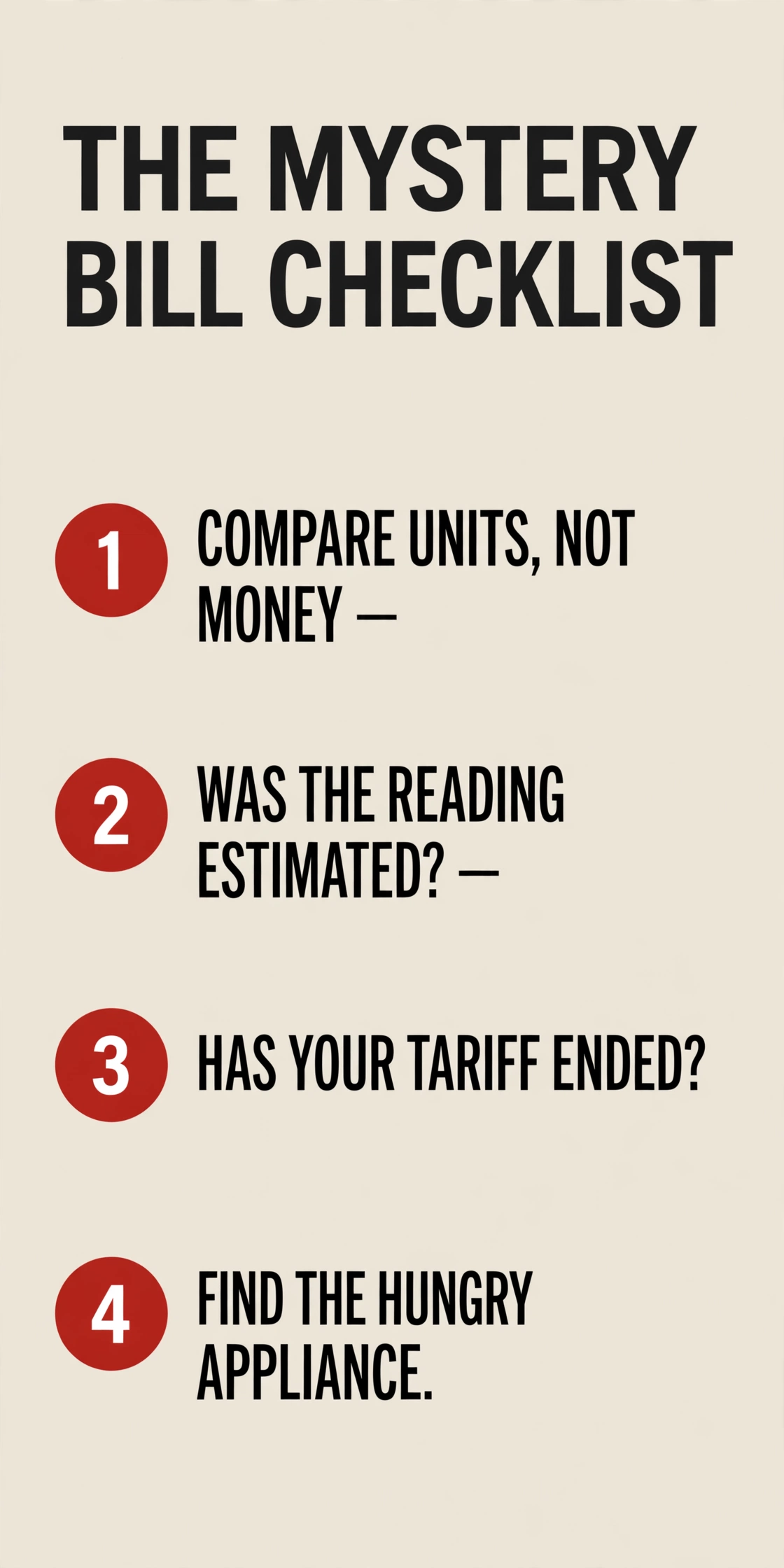
First, compare kilowatt-hours, not money
Your bill is two numbers multiplied together: how much electricity you used, measured in kilowatt-hours (kWh), and what you pay for each one. When the total jumps, either one can be responsible — and they need completely different responses.
So find the kWh figure on this bill and compare it with the same month last year, not last month — usage swings with the seasons, so December against August tells you nothing. If the units are similar but the money is up, your usage is innocent: you've had a price rise, not a usage problem.
If the units genuinely leapt, check the small print: does the bill say the reading was estimated? Suppliers estimate when they don't have a real reading, and estimates tend to run low. Month after month of them ticks along unnoticed — until a real reading lands, and all that unbilled electricity arrives on one bill at once. It looks terrifying. Mostly, it's old usage, not new.
The fix is boring and works: read the meter today, submit it, and ask for a re-bill on actual figures. If the catch-up is large, you can usually spread it over a payment plan rather than paying it at once.
Did your cheap tariff quietly end?
While you're in the paperwork, check the tariff name. Fixed deals have end dates, and when one ends you usually roll automatically onto a far pricier standard rate. Nothing in your house changes; the price of every unit does. This catches people who did everything right two years ago, then forgot all about it. If that's you, the answer isn't using less; it's shopping around again, and putting the new end date in your calendar.
The space heater did it
But say the units really did climb, on a real reading. Now we go hunting inside the house — first, wherever somebody is trying to keep warm.
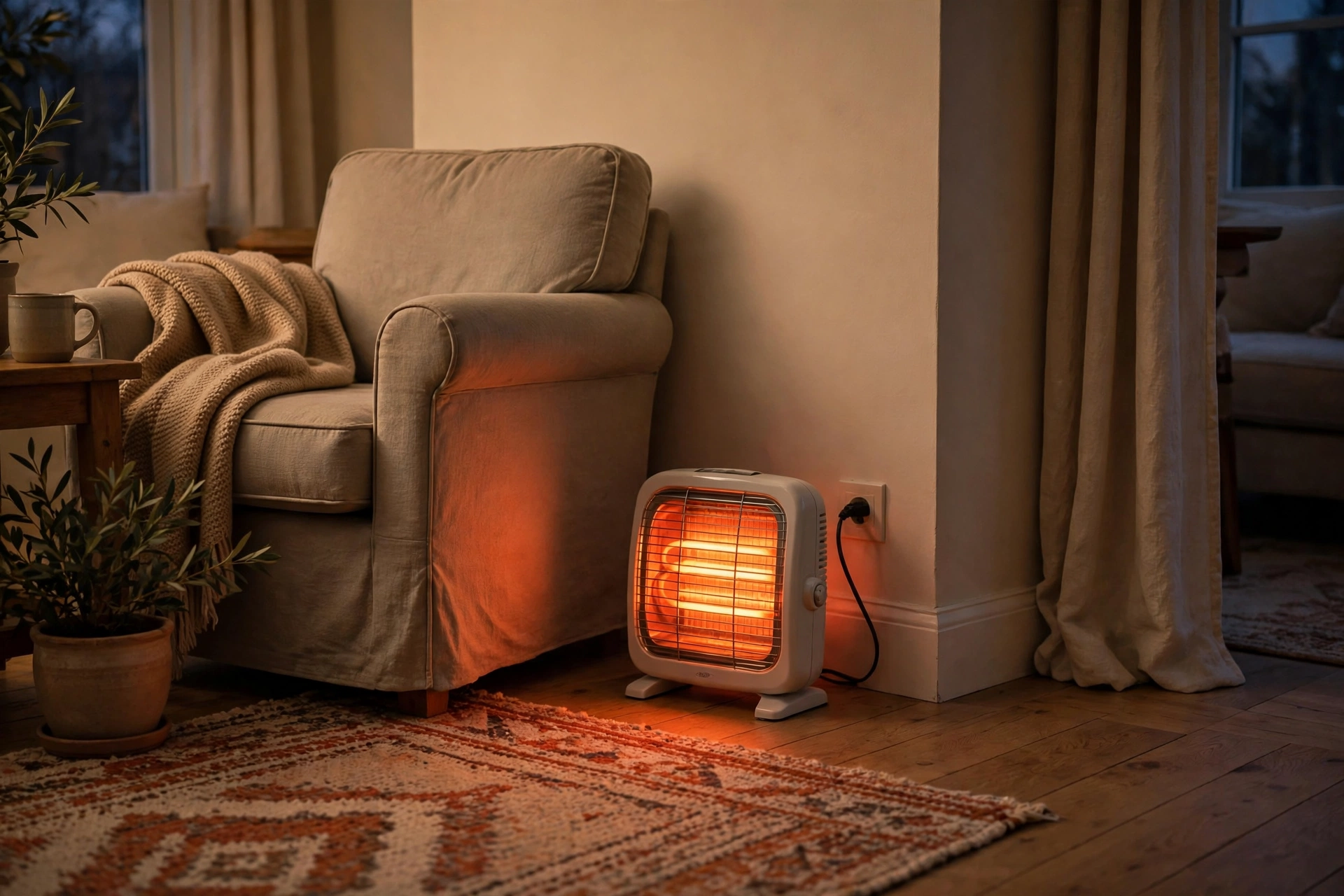
Ask around any energy forum about a bill that doubled and one answer comes up again and again: a small plug-in space heater. It looks harmless — knee-high, cheap to buy, a cosy orange glow. A typical fan heater draws 2,000 watts. At an example rate of 30 cents per kWh, one hour of it uses 2 kWh and costs about 60 cents.
Sixty cents sounds like nothing. It isn't. Run it eight hours a day — a cold home office, a teenager's bedroom — and you're at roughly $145 a month. Rates vary, so do your own sums, but the shape of the problem never changes: small heater, long hours, enormous appetite.
And it has relatives. The tumble dryer that only comes out in winter. The hot tub. Heated floors left on around the clock. The dehumidifier in a damp house. The aquarium heater. And the newest: an electric car charging at home, adding a second household's worth of demand overnight.
Something is broken, or stuck on
If no new heater or habit explains it, suspect something old that's misbehaving. Appliances that should cycle on and off sometimes stop cycling — and a heating element that never rests eats electricity invisibly.
The usual suspects: a fridge whose door seal has perished, leaking cold air so the compressor runs constantly to keep up. (If yours is also the thing humming away at night, here is why a fridge makes a buzzing noise at night, and what to check.) An immersion or water heater left on boost, reheating a full tank around the clock. A heat pump that has fallen back on its auxiliary resistance heat — the expensive backup — and stayed there. A pump that's stuck.
Here's the test that finds them: the 3 a.m. test. When the house is asleep — heating off, nobody cooking, no laundry — what's still drawing power? A healthy house sips overnight: fridge, router, a few standby lights. If your smart meter's in-home display shows a fat, constant draw at three in the morning, something is on that shouldn't be. A plug-in energy monitor then tells you exactly what each suspect costs. Most people find the culprit within a day.
Or maybe your life changed
Sometimes the trail ends somewhere less dramatic: your life changed, and the meter noticed first. Working from home adds a heated room, a computer, lights and a kettle on overtime. A new baby means the washing machine and dryer running daily, and heating kept on for someone small and unimpressed by blankets. A teenager discovers long showers and a gaming PC. Guests move in for a month. Or the month was colder and darker than last year — lights and heating on longer, washing dried indoors. None of it feels like "using more". All of it is.
The rare ones: faulty meters and crossed wires
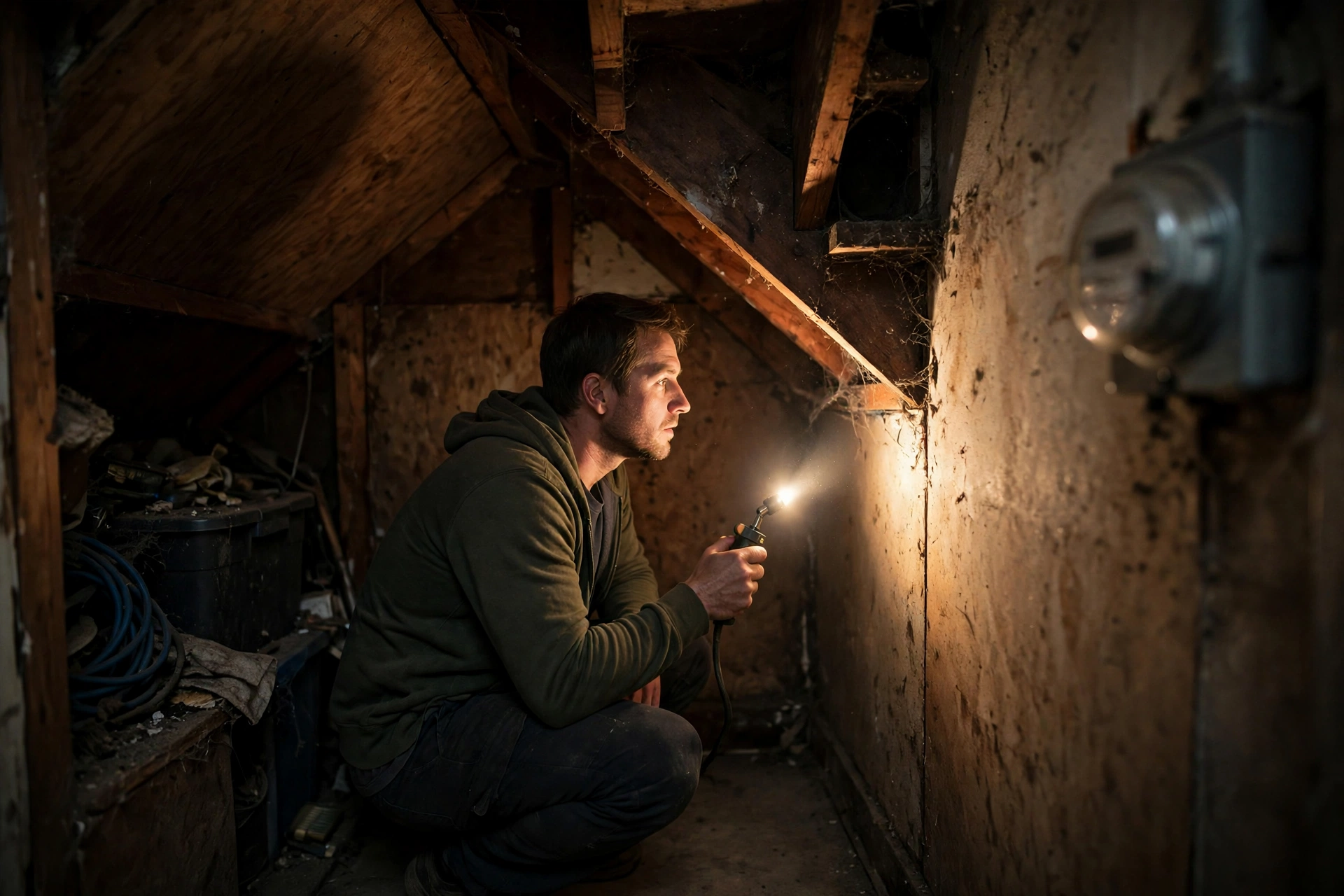
Then there are the rare cases, real enough to rule out. First, a faulty meter. The test is simple: turn everything off at the breaker and watch. With nothing drawing power, the meter should stop — an old spinning-disc meter sits still, and a smart meter stops ticking units upward. If yours doesn't, report it; suppliers can test and replace a faulty one.
In flats there's one more possibility, stranger but documented: a wiring mix-up, where your meter is recording a neighbour's supply, or theirs is recording yours. The clue is usually a bill that makes no sense alongside a neighbour whose bill is suspiciously tiny. Suppliers can check whose meter feeds which flat and untangle it. It's uncommon — but do the checks before you rule anything out.
What the usual suspects cost to run
What common appliances cost per hour at the example rate of 30 cents per kWh — a sense of scale, not a quote, since your rate will differ. The US Department of Energy's Energy Saver pages publish typical wattages for most appliances, if you want to check a figure for your own model.
Appliance costs as a bulleted list:
- Space heater — 2,000 W — about $0.60 per hour
- Tumble dryer — 2,500 W — about $0.75 per hour
- Electric oven — 2,200 W — about $0.66 per hour
- Kettle — 3,000 W, but only for minutes at a time — about $0.90 per hour while running
- EV home charger — 7,000 W — about $2.10 per hour
- Fridge — about 150 W on average, cycling on and off — about $0.05 per hour
Frequently asked questions
My bill doubled and I genuinely changed nothing. What do I check first?
The kilowatt-hours. Compare this bill's units with the same month last year. If they're similar, your usage didn't change — the price did. If the units jumped, check whether the bill says "estimated". Months of low estimates followed by one real reading is the most common cause of a shocking bill. Fix: a meter reading and a re-bill.
Can an estimated bill really be that wrong?
Yes, because the error compounds. Each estimated month might be only a little low, but the shortfall doesn't disappear, it accumulates. When a real reading arrives, all those missing units land on one bill at once. The electricity was genuinely used, just never charged for. Regular readings, or a smart meter, stop it happening again.
How can I find out what's using the power?
Start with the 3 a.m. test: check your smart meter's in-home display in the middle of the night, when almost nothing should be running. Then use a plug-in energy monitor on the suspects — fridge, water heater, dryer, anything with a heating element or a motor — and measure each over a day. Heating elements and motors are where the money goes; lights and phone chargers are rounding errors.
Could my meter actually be faulty?
Possible, but the least likely explanation here. Do the breaker test: switch everything off and watch the meter. It should stop dead — no disc creeping, no smart meter units ticking up. If it keeps counting with the whole house off, contact your supplier and ask for a meter test.
Could I be paying for my neighbour's electricity?
In flats and converted buildings, occasionally, yes — meters and flats get crossed during building work or meter swaps. The tell-tale sign is your usage making no sense while someone else's seems oddly low, or your meter spinning while your flat sits empty. Suppliers can check which meter feeds which property and correct the billing.
The bill is a clue, not a verdict
A shocking bill feels like an accusation, but it's really just a message: something changed, and the change left fingerprints. Nine times out of ten they belong to an estimated reading catching up, a tariff that ended while you weren't looking, one small heater doing heroic hours, or an old appliance that stopped switching off. Start with the units, work through the suspects in order, and the mystery usually solves itself — no blunder, no conspiracy, just electricity doing what it was asked to do. And if you share the house, settle the splitting before the next bill lands: agreeing in advance on how to split rent and bills fairly with roommates keeps the detective work friendly.